Research published in Nature Sustainability estimates that 403 US hyperscale data centers consumed approximately 82 terawatt-hours of electricity and were associated with 25.7 million metric tons of carbon dioxide emissions during the study period.
A Growing Environmental Challenge Behind Artificial Intelligence
The rapid expansion of artificial intelligence is creating a significant environmental challenge as large data centers consume increasing amounts of electricity to support cloud computing, advanced software and AI systems.
A new study published on November 16 in Nature Sustainability provides one of the most detailed estimates yet of the electricity consumption and carbon emissions associated with America’s largest hyperscale data centers.
Researchers affiliated with Harvard University examined 403 hyperscale data centers operating across the United States between May 2024 and April 2025.
Their findings suggest that these facilities consumed approximately 82 terawatt-hours of electricity under the study’s central operating scenario.
The associated carbon dioxide emissions were estimated at approximately 25.7 million metric tons.
The research is particularly important because it examines individual facilities rather than relying exclusively on broad national estimates of data-center energy consumption.
How Researchers Measured the Environmental Impact
The research team used satellite imagery to identify hyperscale facilities and estimate their electricity requirements.
The researchers then combined information about facility capacity with data from the US Environmental Protection Agency to estimate the emissions associated with electricity generation in the relevant regional power grids.
The estimated electricity consumption ranged from approximately 68 to 99 terawatt-hours, depending on operating assumptions.
Under the central scenario, data-center electricity demand represented approximately 1.8% of total US electricity consumption during the study period.
The study also estimated that approximately 54% of the electricity attributed to these facilities came from fossil-fuel sources.
Natural gas accounted for approximately 38%, while coal represented approximately 15%.
These figures illustrate the importance of the electricity mix in determining the environmental consequences of digital infrastructure.
A data center powered predominantly by renewable or low-carbon electricity can have a substantially different operational emissions profile from an otherwise comparable facility relying heavily on fossil fuels.
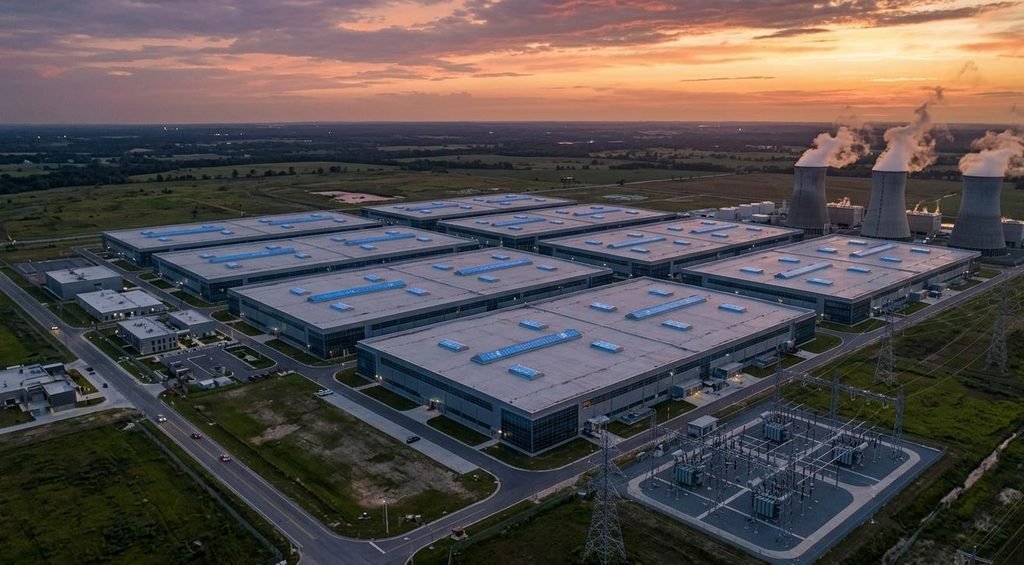
Four States Account for More Than Half of Data Center Electricity Use
The researchers identified substantial regional differences.
Virginia, Oregon, Ohio and Iowa together accounted for more than half of the electricity consumption examined in the study.
This concentration has implications for regional electricity planning, grid investment and infrastructure development.
Communities hosting large data centers may experience growing demand for electricity, additional pressure on transmission infrastructure and increased interest in new power-generation projects.
The environmental impact is therefore not limited to the technology companies operating the facilities.
It also involves electricity providers, regulators, local governments and the communities connected to regional power systems.
Important Limitations of the Research
The study does not establish the exact electricity consumption of every US data center.
The researchers acknowledged that publicly available information was insufficient to include all facilities.
They also could not distinguish precisely between electricity used for general cloud services and electricity dedicated specifically to artificial-intelligence workloads.
This means the estimated emissions should not be described as the emissions of AI alone.
They represent the estimated environmental footprint of the selected hyperscale data centers, which support a combination of computing activities.
The study also did not directly measure health outcomes associated with the facilities.
The Environmental Challenge for the Next Generation of Computing
The findings arrive as governments and technology companies face increasing pressure to demonstrate that the expansion of AI infrastructure can be reconciled with climate objectives.
The central challenge is not simply reducing the number of data centers.
It is ensuring that new computing capacity is supported by cleaner electricity, more efficient hardware, improved cooling systems and transparent environmental reporting.
As artificial intelligence becomes increasingly integrated into business, science and everyday life, the environmental performance of its infrastructure will become an increasingly important measure of technological progress.